Key Takeaways
- Oil can enter cooling systems through leaking heat exchangers, failed seals, equipment leaks, process carryover, or poor housekeeping.
- Contamination can reduce heat transfer, encourage biological growth, increase corrosion, and create maintenance or discharge concerns.
- The best response is to locate and repair the source before selecting separation, filtration, or chemical treatment methods.
Oil in Cooling Water
Oil in Cooling Water is one of the most common but often missed problems in industrial cooling systems. It can enter the system through a leaking heat exchanger, failed seal, equipment leak, or poor housekeeping. At first, the issue may look small. However, even a small amount of oil can lead to fouling, poor heat transfer, corrosion risk, and higher maintenance costs.
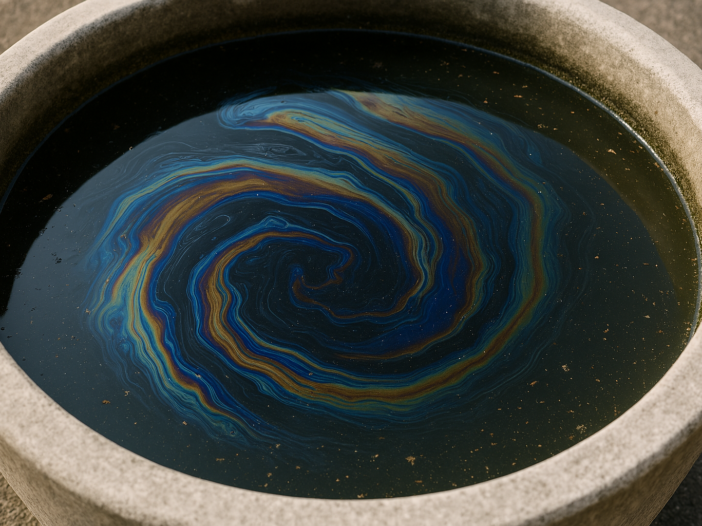
When oil gets into cooling water, it does not always stay on the surface. Sometimes it floats as a sheen. In other cases, it mixes with water, solids, and biological growth. As a result, the system can become harder to clean and more costly to manage.
This guide explains how oil enters cooling water systems, why it matters, how to spot it early, and what facilities can do to control it.
For a full treatment approach, oil control should be part of a complete cooling water treatment program.
Why Oil in Cooling Water Matters
Oil in Cooling Water can affect more than water quality. It can also affect system output, energy use, safety, and compliance.
Reduced Heat Transfer
Oil can form a thin film on heat transfer surfaces. This film works like an insulating layer. Because of this, cooling towers, condensers, and heat exchangers may need to work harder to remove the same amount of heat.
As a result, the system may show:
- Higher operating temperatures
- Reduced cooling performance
- Higher energy use
- More stress on equipment
- More frequent cleaning needs
In simple terms, oil can make the system use more energy while giving less cooling performance.
More Fouling and Biological Growth
Oil can also feed bacteria and fungi. Therefore, oil contamination can make biological fouling worse.
When oil mixes with dirt, solids, and microbes, it can form sticky deposits that are hard to remove. These deposits may build up on tower basins, heat exchangers, filters, strainers, and piping.
In addition, oil can make biofilm problems worse. To learn more about how biofilm affects cooling systems, read Glacier Labs’ article on biofilm cooling tower performance.
Corrosion and Equipment Damage
Oil can trap solids and other materials against metal surfaces. Over time, this can create areas where corrosion starts under deposits.
This may lead to:
- Pitting
- Tube damage
- Leaks
- Shorter equipment life
- Higher repair costs
- More unplanned downtime
Because corrosion can happen under oily deposits, the damage may not be easy to see right away.
Maintenance and Downtime
Oil contamination can also create more work for maintenance teams. For example, strainers may plug more often, pumps may operate less efficiently, and heat exchangers may need cleaning sooner than expected.
As a result, facilities may face:
- More labor hours
- More shutdowns
- More cleaning costs
- More chemical use
- Less reliable system performance
Compliance and Discharge Risk
Oil in cooling water can also create discharge concerns. For example, oil and grease in blowdown or wastewater may be subject to permit limits. Also, visible oil sheens can create reporting or compliance concerns.
For additional guidance, review the EPA’s page on harmful quantities of discharged oil.
Safety and Housekeeping
Oil around cooling towers, basins, decks, or walkways can create slip risks. In addition, oily mist or odors may affect working conditions near the system.
OSHA’s rule for walking-working surfaces also includes keeping work areas clean, orderly, sanitary, and free of hazards such as leaks and spills.
How Oil in Cooling Water Starts
Oil contamination is usually a sign of a process, equipment, or housekeeping problem. Therefore, the first step is to find the source.
Heat Exchanger Leaks
A leaking heat exchanger can allow oil or process fluid to enter the cooling water. This is common in facilities that handle fuels, lubricants, oils, or other process fluids.
Even a small leak can spread oil throughout the system over time.
Pump, Seal, and Lubricant Leaks
Oil can also enter through failed seals, worn packing, leaking bearings, or hydraulic equipment near the cooling tower.
For example, if oil drips onto a tower deck or into a basin, it may be washed into the cooling system during cleaning or rain events.
Chiller or Compressor Oil Carryover
Some chillers and compressors use oil-lubricated systems. If separators or related parts fail, oil may carry over into the cooling circuit.
Because this type of issue may not be obvious at first, regular inspection is important.
Poor Housekeeping
Oil can also enter the system through wash water, runoff, or misrouted drains. For instance, oily floor washdown should not be allowed to reach cooling tower basins or return lines.
As a result, good housekeeping and proper drainage are part of good water treatment.
Cross-Contamination
Sometimes oil enters cooling water because a process drain, sump, or wastewater line is incorrectly routed. When this happens, the cooling system may receive oily water that was never meant to enter it.
Therefore, it is important to review piping, drains, and process tie-ins when oil keeps coming back.
Types of Oil Contamination in Cooling Water
Oil does not always appear the same way in cooling water. The right treatment depends on the form of oil present.
Free Oil
Free oil usually floats on the surface. It may appear as a slick, patch, or sheen.
This type of oil is often easier to remove with skimmers, separators, or surface removal tools.
Dispersed Oil
Dispersed oil is made of small droplets spread through the water. It may make the water look cloudy or hazy.
This can happen when pumps or high flow break oil into smaller droplets.
Mixed or Emulsified Oil
Sometimes oil becomes very finely mixed into the water. This may happen because of surfactants, cleaners, process chemicals, or other materials.
In this case, a simple skimmer may not work well. Instead, the system may need chemical conditioning before the oil can separate.
Dissolved Hydrocarbons
Some lighter oil-related compounds can dissolve into water. These may not be visible. Therefore, lab testing may be needed when oil is suspected but not easy to see.
How to Recognize Oil in Cooling Water
Early detection can prevent a small issue from becoming a larger system problem.
Visual Signs
Look for:
- Rainbow sheens on basin water
- Floating oil patches
- Oily foam
- Cloudy or milky water
- Staining on tower decks or basin walls
- Oily deposits on strainers or filters
Odor Changes
Oil contamination may create unusual smells. For example, the water may smell like fuel, burnt oil, hydraulic fluid, or process chemicals.
If the smell is new or getting worse, the system should be checked.
Cooling Water Performance Changes
Oil may also show up as a performance issue. Watch for:
- Rising heat exchanger temperatures
- Lower cooling efficiency
- Higher pressure drop
- More frequent strainer plugging
- More cleaning than usual
- Poor heat transfer with no clear cause
Testing and Monitoring
To confirm the issue, facilities may use:
- Oil and grease testing
- Turbidity testing
- Visual jar testing
- Lab testing
- Microscopic checks
- Oil-in-water monitoring tools
For higher-risk systems, online monitoring may help detect problems faster.
Practical Steps if You Suspect Oil in Cooling Water
If you suspect Oil in Cooling Water, take a simple and organized approach.
Step 1: Confirm the Problem
First, inspect the basin, sump, filters, and heat exchangers. Then, collect samples for oil and grease testing if needed.
Also, compare the results to past data if you have it.
Step 2: Find the Source
Next, look for likely entry points. Check heat exchangers, seals, pumps, nearby hydraulic units, drain lines, and recent maintenance activity.
This step is important because treatment equipment will not solve the problem if oil continues to enter the system.
Step 3: Use Temporary Controls
If oil is present, temporary controls may help reduce damage while the source is being fixed.
These may include:
- Portable skimmers
- Temporary separation tanks
- Added filtration
- More frequent cleaning
- Adjusted blowdown
- Extra monitoring
However, these are short-term controls. The source still needs to be repaired.
Step 4: Repair the Cause
Once the source is found, repair the leaking exchanger, seal, drain, or equipment issue. Also, update housekeeping practices if oil is entering through washdown or runoff.
This helps prevent the issue from returning.
Step 5: Review the Treatment Program
Finally, review the cooling water treatment program. Oil can affect biological growth, corrosion control, solids loading, and chemical performance.
Routine inspection and cleaning should also follow a practical cooling tower maintenance checklist.
Treatment Options for Oil in Cooling Water
The right treatment depends on the type of oil, how much is present, and whether the source has been controlled.
Start With the Oil Source
Source control should always come first. Before adding new equipment or chemicals, identify and reduce the oil source.
This may include:
- Repairing leaking heat exchangers
- Fixing seals and gaskets
- Improving drain routing
- Keeping oily wash water away from cooling basins
- Adding spill control procedures
- Improving preventive maintenance
Without source control, the same issue may keep coming back.
Use Physical Separation for Free Oil in Cooling Water
If oil is floating on the surface, physical separation may work well.
Common options include:
- Belt skimmers
- Tube skimmers
- Disk skimmers
- Gravity separators
- Coalescing plate separators
These tools can help remove free oil from basins, sumps, or side-stream loops.
However, they may not work well when the oil is finely mixed into the water.
Treat Mixed Oil With Chemical Conditioning
When oil is mixed into the water, chemistry may be needed before it can be removed.
This may include:
- pH adjustment
- Coagulants
- Flocculants
- Demulsifiers
These tools help oil droplets come together so they can separate more easily.
After that, the oil and solids can be removed with separation, flotation, or filtration.
Add Advanced Treatment When Needed
Some systems may need more advanced treatment, especially when discharge limits are strict.
Possible options include:
- Dissolved air flotation
- Media filtration
- Specialty oil removal units
- Membrane filtration
- Activated carbon
However, these options should be selected carefully. Each system has different flow rates, water quality, oil type, and discharge needs.
Integrating Oil in Cooling Water Control Into Your Treatment Program
Oil control should not be treated as a one-time cleanup task. Instead, it should be part of the overall cooling water plan.
Build a Risk Map
Start by listing equipment that could leak oil into the cooling system.
This may include:
- Heat exchangers
- Compressors
- Pumps
- Hydraulic units
- Bearings
- Process drains
- Sumps
- Nearby oily work areas
This helps the team know where to inspect first.
Set Monitoring Points
Next, choose key places to inspect and sample.
Good points may include:
- Cooling tower basin
- Heat exchanger outlets
- Sumps
- Side-stream filters
- Blowdown lines
- Low-flow areas
Then, track changes over time.
Create Trigger Limits
Facilities should define what action is needed when oil is found.
For example:
- Visible sheen may trigger inspection
- Oil and grease above a set level may trigger testing
- Higher temperature or pressure drop may trigger cleaning
- Repeated oil signs may trigger a maintenance review
This makes the response faster and more consistent.
Improve Team Communication
Oil in cooling water often involves more than one team. Therefore, operations, maintenance, and water treatment teams should share information.
For example, maintenance should tell the water treatment team about equipment leaks or repairs. Likewise, the water treatment team should report signs of oil, fouling, or corrosion.
How Glacier Labs Helps Control Oil in Cooling Water
Glacier Labs helps industrial and commercial facilities manage cooling water problems that affect reliability, cost, and compliance.
When dealing with Oil in Cooling Water, we can help evaluate the system as a whole.
System Review
We review the cooling water system, heat exchangers, basins, filters, equipment layout, and possible oil sources.
This helps identify where the oil may be entering and how it is affecting system performance.
Contamination Review
We help determine whether the oil is free, dispersed, mixed into the water, or linked with solids and biological growth.
This matters because each type of oil problem may require a different control method.
Oil in Cooling Water Treatment Strategy
Based on the findings, Glacier Labs can recommend practical treatment options such as source control, skimming, separation, filtration, chemical conditioning, or added monitoring.
The goal is to control the issue without adding unnecessary cost or complexity.
Ongoing Support
After the issue is addressed, we can help monitor system performance and adjust the program as conditions change.
This supports cleaner cooling water, better heat transfer, lower fouling risk, and more reliable system operation.
Keep Oil in Cooling Water From Becoming a Bigger Problem
Oil in Cooling Water should not be ignored. Even small amounts can reduce heat transfer, increase fouling, raise corrosion risk, and create compliance concerns.
However, with early detection, source control, proper treatment, and routine monitoring, facilities can reduce the impact of oil contamination and protect critical cooling equipment.
If your system is showing signs of oil sheen, poor heat transfer, recurring fouling, or unexplained performance loss, Glacier Labs can help review the system and recommend the right next step.
Protect your cooling system before oil contamination becomes a costly problem.
Related support: Explore Glacier Labs’ cooling water treatment programs and guidance on side-stream filtration for cooling towers.