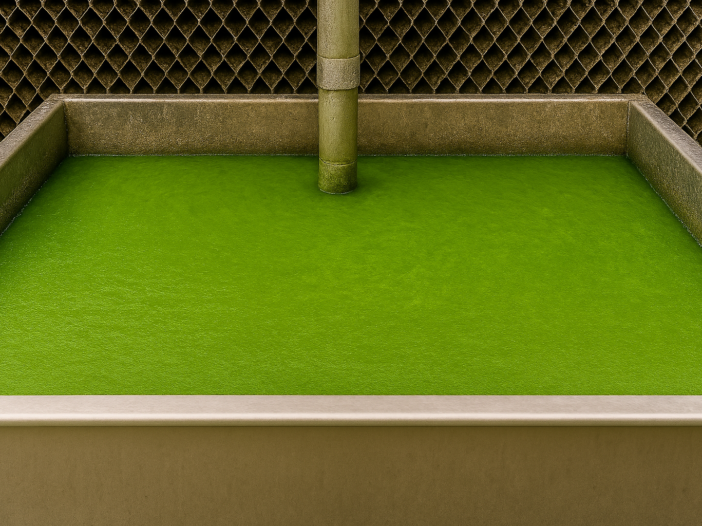
Biofilm cooling tower performance issues are one of the most damaging but often underestimated problems in industrial cooling systems. Biofilm forms as a slime-like layer of microorganisms on heat exchange surfaces, tower fill, piping, basins, and other wetted areas.
At first, biofilm may seem like a minor water quality issue. But over time, it can reduce heat transfer, increase energy use, accelerate corrosion, and create recurring maintenance problems.
For facilities that depend on reliable cooling systems, biofilm cooling tower performance problems can quickly become operational cost issues. Poor biological control can force equipment to work harder, increase maintenance demand, and reduce cooling efficiency.
At Glacier Labs, we help facilities identify, control, and prevent biofilm as part of a complete cooling tower water treatment program. Our goal is to keep cooling systems cleaner, more efficient, and more reliable.
Key Takeaways
- Biofilm creates an insulating layer that reduces heat transfer, increases energy use, and weakens cooling performance.
- Uncontrolled biological growth can contribute to corrosion, restricted water flow, recurring fouling, and equipment damage.
- Effective control combines microbial monitoring, appropriate chemistry, solids removal, routine cleaning, and ongoing program adjustments.
What Is Biofilm in Cooling Towers?
Biofilm is made up of bacteria, algae, fungi, and other microorganisms. These organisms attach to wet surfaces and produce a sticky protective layer called extracellular polymeric substances, or EPS.
This protective layer makes biofilm difficult to remove. It can also reduce the effectiveness of standard chemical treatment because microorganisms inside the biofilm are protected from direct exposure to biocides.
Cooling towers create ideal conditions for biofilm growth because they often have:
- Warm water temperatures
- Constant aeration
- Nutrients from makeup water or process contamination
- Wet surfaces where microorganisms can attach
- Areas of low flow or stagnation
- Suspended solids that support microbial growth
Once microorganisms attach to a surface, they can multiply quickly. What begins as a thin film can become a thick biological deposit that affects cooling tower performance, water quality, and equipment reliability.
This is why cooling tower biofilm control should be part of every serious industrial cooling water treatment program.
How Biological Fouling Affects Cooling Tower Performance
The biggest problem with biofilm is its effect on heat transfer.
Biofilm acts like an insulating layer between the water and the heat exchange surface. Even a thin biological layer can make it harder for the system to remove heat efficiently.
As biofilm builds up, the system may need more energy to produce the same cooling result. This can affect chillers, condensers, heat exchangers, cooling tower fans, pumps, and process equipment.
Common performance issues include:
- Reduced heat transfer efficiency
- Higher condenser or heat exchanger outlet temperatures
- Increased fan and pump energy use
- Poor cooling capacity
- Difficulty maintaining system setpoints
- Higher operating costs
- More frequent maintenance requirements
In simple terms, biological fouling in cooling towers makes the system work harder while delivering less cooling performance.
For a broader look at how poor water treatment affects energy costs, maintenance, compliance, and long-term equipment performance, link to Glacier Labs’ article on the financial impact of improper water treatment.
Biofilm Cooling Tower Performance and Heat Transfer Efficiency
Biofilm is especially harmful because it can reduce heat transfer even when the layer is thin. Since biofilm contains water, organic material, and microbial growth, it behaves like an insulating barrier on heat exchange surfaces.
When biofilm cooling tower performance problems begin, the system may show signs such as rising temperatures, higher energy demand, and reduced equipment performance.
This is why facility teams should not wait until biofilm is clearly visible. By the time slime or heavy deposits are easy to see, the system may already be losing efficiency.
A strong cooling water treatment program should detect and control biofilm before it causes serious performance loss.
Biofilm Can Also Increase Corrosion Risk
Biofilm does more than reduce heat transfer. It can also contribute to corrosion.
When biofilm forms on metal surfaces, it can create different conditions above and below the biofilm layer. These differences may contribute to microbiologically influenced corrosion, often called MIC.
Biofilm-related corrosion can lead to:
- Pitting
- Metal loss
- Tube damage
- Leaks
- Shorter equipment life
- Higher repair costs
- Increased system failure risk
This makes cooling tower corrosion control an important part of biofilm prevention. If biofilm is not managed properly, it can hide corrosion activity underneath the surface until damage has already started.
Biofilm, corrosion, scale, and biological growth are all connected. That is why a complete chemical treatment program should address the full range of cooling system risks, not just one symptom. Quantitative confirmation and guides treatment strategy.
Other Problems Caused by Biofilm in Cooling Towers
Uncontrolled biofilm can create several system problems beyond heat transfer loss and corrosion.
Increased Pressure Drop
Biofilm and biological deposits can narrow flow paths and restrict water movement. This may increase pumping demand and reduce system efficiency.
More Frequent Cleaning
Once a surface has been colonized, remaining biofilm fragments can help the system foul again more quickly. This creates a cycle of cleaning, temporary improvement, and re-fouling.
Poor System Reliability
Biofilm can lead to unplanned maintenance, reduced equipment performance, and system downtime. For facilities where cooling is mission-critical, this becomes a serious operational risk.
Higher Treatment Difficulty
Mature biofilm is harder to control than early-stage microbial growth. The longer it remains in the system, the more difficult and expensive it may be to remove.
This is why biofilm prevention in cooling towers is more effective than waiting for severe fouling before taking action.
Early Signs of Biofilm in Cooling Towers
Biofilm is easier to control when it is found early. Facility teams should watch for signs such as:
- Slime or dark films on tower fill, basins, tubes, or baffles
- Rising condenser or heat exchanger outlet temperatures
- Reduced cooling performance without a clear change in load
- Increased differential pressure across heat exchangers
- Unusual odors or discoloration in cooling water
- More frequent strainer fouling
- Shorter time between required cleanings
- Recurring biological growth after treatment
Routine inspection and cleaning are important because biofilm often develops alongside sludge, scale, and other deposits. Glacier Labs’ cooling tower maintenance checklist provides a useful guide for inspection, cleaning, disinfection, and long-term maintenance planning.
For additional industry guidance, the CDC notes that scale, corrosion, sediment control, and system cleaning are critical for cooling tower operation and Legionella prevention.
How Glacier Labs Improves Cooling Tower Biofilm Control
Effective biofilm control requires more than one chemical feed or one-time cleaning. It requires a complete program that looks at water chemistry, system design, microbial activity, filtration, maintenance practices, and operating conditions.
Glacier Labs helps facilities control biofilm through a practical, multi-layered approach.
1. System Assessment
We review the cooling system, water source, operating temperature, flow conditions, metallurgy, and process risks. This helps identify where biofilm is likely to form and why it may be recurring.
2. Microbial Monitoring
We help establish a baseline for biological activity. This may include visual inspections, microbial testing, and water quality review to better understand the severity of the problem.
3. Chemical Treatment Strategy
A strong program may include oxidizing biocides, non-oxidizing biocides, biodispersants, corrosion inhibitors, and other treatment tools depending on the system.
The goal is to control microbial growth while protecting system equipment.
4. Filtration and Solids Control
Suspended solids and organic debris can support microbial growth. Side-stream filtration for cooling towers can help reduce the particles and debris that contribute to biological fouling.
Better solids control can also support cleaner heat exchange surfaces and more stable system performance. Filtration does not replace a chemical treatment program, but it can strengthen microbiological control by reducing the material that shelters biofilm.
5. Operational Improvements
Biofilm often grows in dead legs, low-flow areas, stagnant zones, and poorly maintained sections of a system.
Improving circulation, blowdown control, cleaning practices, and inspection frequency can help reduce risk.
6. Ongoing Monitoring and Adjustment
Cooling tower conditions can change due to weather, makeup water quality, production load, and system operation.
That is why treatment programs should be reviewed and adjusted based on actual system performance, not just set once and forgotten.
Veolia’s industrial water treatment handbook also identifies biofilms as part of microbiological control challenges in cooling systems.
The Value of a Strong Cooling Water Treatment Program
Addressing biofilm cooling tower performance early helps facilities reduce efficiency loss before it becomes a larger maintenance or energy problem. Biofilm control is not only about keeping water clean. It helps protect the entire cooling system.
A strong cooling water treatment services program can help:
- Improve heat transfer
- Reduce energy waste
- Lower maintenance costs
- Control biological fouling
- Reduce corrosion risk
- Improve system reliability
- Extend equipment life
- Reduce unplanned downtime
- Support better industrial cooling tower maintenance
For facilities in Oregon, California, Idaho, Nevada, Arizona, and surrounding regions, proper cooling tower water treatment can directly support better operating performance.
Why Facilities Choose Glacier Labs
Glacier Labs has provided industrial and environmental water treatment solutions since 1987. Our team supports facilities with cooling water treatment, boiler and steam system treatment, Legionella control programs, water treatment equipment, and environmental groundwater remediation.
We work with industrial, commercial, healthcare, education, manufacturing, utility, and facility management teams that need reliable water treatment support.
For companies looking for industrial water treatment in Oregon and across the Western U.S., Glacier Labs provides local service support, technical expertise, and practical treatment programs designed around real system conditions.
Our approach is simple:
- Identify the problem
- Improve the treatment program
- Monitor performance
- Adjust based on system data
- Help the system run more reliably
Protect Your Cooling Tower Before Biofilm Becomes a Costly Problem
Biofilm does not have to become an ongoing maintenance issue. With the right monitoring, treatment strategy, filtration support, and water management program, facilities can reduce biological fouling, improve cooling performance, and protect critical equipment.
If your cooling tower is showing signs of slime, poor heat transfer, higher energy use, recurring fouling, or corrosion risk, Glacier Labs can help evaluate the system and recommend the right treatment approach.