Background
A large commercial center adopted commercial cooling tower treatment to reduce water use, cut chemical consumption, and support sustainability goals. This strategy is part of the broader movement towards Commercial Cooling Tower Treatment: Revolutionizing Water Efficiency in such facilities. By replacing liquid chemicals with blended solid concentrates, the facility aligned its operations with environmental targets while maintaining reliable cooling performance. This approach is truly revolutionizing efficiency in water management for commercial cooling systems. The focus on Commercial Cooling Tower Treatment: Revolutionizing Water Efficiency has shown remarkable benefits.
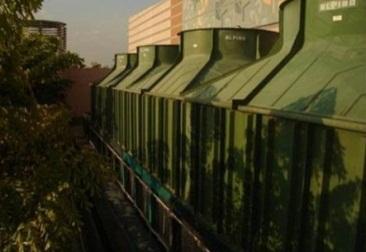
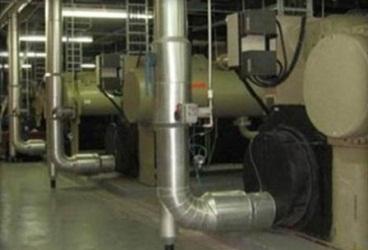
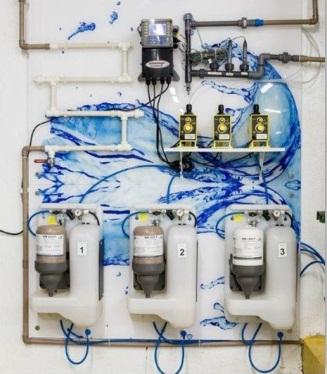
To achieve this, the facility partnered with their water treatment provider to implement sustainable cooling tower treatment. The solution included APTech Group blended solid concentrate products for five cooling towers and chillers, each with 1,000 tons of refrigeration capacity.
Implementation
The team transitioned from liquid chemicals to blended solid concentrate water treatment. This revolutionizing method of water efficiency covered five cooling towers and chillers, using slightly softened municipal water. Commercial Cooling Tower Treatment: Revolutionizing Water Efficiency was evident in the improvements made.
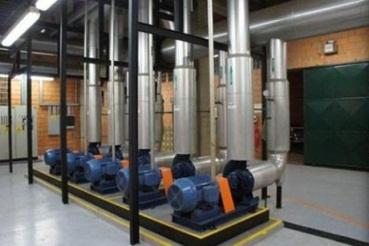
In addition, the facility installed Programmable Logic Controllers (PLCs). These enabled real-time monitoring of corrosion and automated control of chiller operations. Therefore, the system ran more efficiently and required less manual oversight.
The treatment program used a “bleed and feed” approach to deliver products. By revolutionizing water use through this approach, cycles of concentration increased from 5 to 10. Consequently, water consumption and chemical usage dropped significantly.
Results
Over six months, the facility tracked performance across multiple KPIs, demonstrating the impact of Commercial Cooling Tower Treatment: Revolutionizing Water Efficiency.
- Corrosion Control: Maintained the highest protection standards.
- Deposit and Fouling Control: Prevented scaling and buildup effectively.
- Microbiological Control: Achieved strong biofilm and bacteria control.
- Water and Chemical Usage: Reduced consumption supported sustainability goals.
- Heat Exchange Efficiency: Maintained reliable performance.
- Energy Use: Specific energy consumption remained low, lowering the facility’s footprint.
In addition, the program provided equal or better results compared to the liquid system, proving both cost-effective and environmentally responsible.
Conclusion
The transition to commercial cooling tower treatment exceeded expectations. This revolution in water efficiency improved corrosion control, deposit prevention, and microbiological management while lowering water and chemical use. Commercial Cooling Tower Treatment: Revolutionizing Water Efficiency has undoubtedly transformed water management practices.
In conclusion, this case study shows that sustainable cooling tower treatment offers both operational and environmental benefits. Facilities looking for a revolution in efficiency should consider following this model to enhance performance and meet sustainability goals.