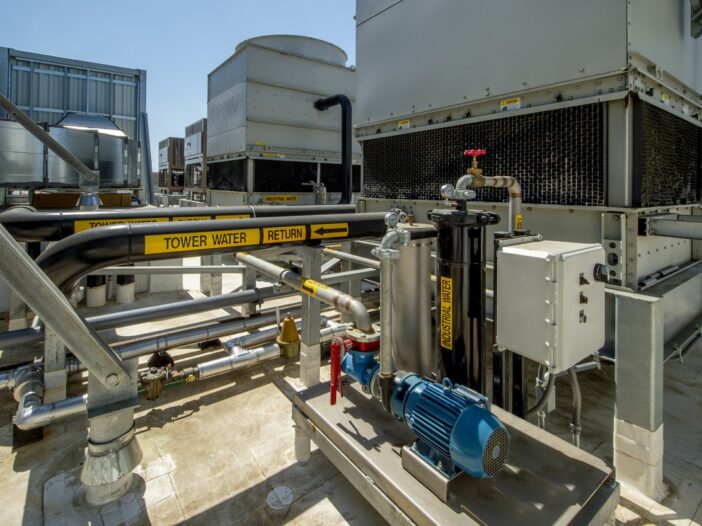
In today’s industrial landscape, cooling systems are the unsung heroes keeping our operations running smoothly. Whether you’re managing a large industrial facility or overseeing a commercial building’s climate control, understanding chemical treatment in cooling systems isn’t just helpful—it’s essential for maintaining efficiency and protecting your investment.
Why Chemical Treatment Matters
At its core, cooling system management comes down to one simple fact: water, despite being our most common cooling medium, brings its own set of challenges. When water circulates through cooling towers and chillers, it carries impurities that, combined with exposure to air, can create significant problems over time. Without proper chemical treatment, these issues can cascade into system failures, safety hazards, and costly repairs.
The Four Horsemen of Cooling System Problems
1. Biological Growth: The Silent Invader
Think of your cooling system as a spa for microorganisms. Warm, moist conditions create perfect breeding grounds for bacteria, mold, and viruses. Most concerning is Legionella bacteria, which can pose serious health risks. While biocides like bromine, chlorine, and peracetic acid (PAA) offer effective treatment, they require careful handling to avoid secondary issues like off-gassing and corrosion.
2. Corrosion: The Metal Eater
When metals disagree, corrosion is their argument. Whether triggered by dissimilar metals, low pH, or excess oxygen, corrosion steadily eats away at your system’s efficiency and reliability. The trick lies in precise dosing of corrosion inhibitors—too little won’t stop the damage, while too much can trigger new problems with alkalinity or scaling.
3. Scale Formation: The Efficiency Thief
Scale is like cholesterol for your cooling system—it builds up slowly but surely, choking efficiency and forcing continuous cleaning cycles. Dealing with highly alkaline hard water requires sophisticated anti-scaling chemicals, but their application must be precise to avoid creating a corrosion problem while solving a scaling issue.
4. Foaming: The Performance Reducer
Foam might look harmless, but in cooling systems, it’s anything but. Created by agitation, dissolved gases, and microbial activity, foam reduces heat transfer efficiency and can trap contaminants that accelerate scaling or corrosion. Proper anti-foaming treatment requires precise metering for even distribution throughout the system.
Choosing Your Weapon: Chemical Feed Pumps
The right chemical feed pump is your first line of defense. When selecting a pump, consider these crucial factors:
- Size Matters: Your pump’s flow capability must match your chemical dosing requirements exactly. An undersized pump will wear out quickly, while an oversized one can’t deliver accurate doses.
- Technology Choices: The battle between diaphragm and peristaltic pumps continues, with each offering distinct advantages. For handling off-gassing chemicals, look for diaphragm pumps with automatic degassing valves or consider multi-diaphragm designs for smooth, continuous flow.
- Material Compatibility: Not all pump materials can handle every chemical. Invest time in researching compatibility between your treatment chemicals and pump components.
- Precision Dosing: Modern technology offers solutions like flow meter synchronization and sensor-based dosing systems. These investments in accuracy pay dividends in system performance.
The Long-Term Payoff
Investing in proper chemical treatment delivers benefits across multiple fronts:
- Equipment Protection: Prevent damage before it occurs, extending system lifespan
- Enhanced Efficiency: Clean heat transfer surfaces mean lower energy costs
- Reduced Maintenance: Fewer emergency repairs and less scheduled maintenance
- Water Conservation: Efficient operation means less water waste
- Safety Compliance: Protect workers and meet regulatory requirements
- Cost Savings: While initial investments might be higher, long-term savings are substantial
- Environmental Responsibility: Contribute to sustainability goals through optimized operations
The Cost Consideration
While it’s tempting to cut corners on chemical treatment systems, especially when budgets are tight, this approach often backfires. Lower-quality pumps typically deliver less accurate dosing, require more frequent maintenance, and fail sooner. When you factor in reduced cooling efficiency, increased maintenance costs, and potential safety violations, choosing the cheapest option becomes expensive very quickly.
Conclusion
Effective chemical treatment in cooling systems isn’t just about adding chemicals to water—it’s about protecting your investment, ensuring operational efficiency, and maintaining safety standards. By understanding the challenges and implementing appropriate solutions, you can maintain optimal system performance while controlling costs and protecting the environment.
Remember: consulting with qualified water treatment provider such as Glacier Labs isn’t just about buying chemicals—it’s about partnering with experts who can help you design and implement a treatment system that meets your specific needs. In the long run, this expertise proves invaluable in maintaining efficient, safe, and compliant cooling operations.